

Common Medication Mistakes to Avoid at Home
Most medication mistakes at home are ordinary and preventable. Here are the timing, ingredient, refill, and storage slips worth watching for, plus routines that catch them.
Most medication mistakes at home are not dramatic. They look like a cold remedy swallowed alongside a painkiller that contains the same ingredient, or a bottle that has sat on a bathroom shelf since two winters ago. They happen because people are tired, interrupted, or simply doing what seems sensible at the time.
The encouraging part is that a small number of problems cause most of the trouble, and each one has a practical fix. What follows is a working list: the mistakes worth watching for, and the routines that make them much less likely.
Timing Errors Are More Common Than You Think
"Twice a day" usually means roughly every twelve hours, not breakfast and bedtime. "Three times a day" often means spaced through waking hours rather than with three meals. Those distinctions matter more for some medicines than others, and only your prescriber or pharmacist can tell you which camp yours fall into. A blood pressure tablet taken at 8 a.m. and 11 p.m. is not doing the same job as one taken twelve hours apart.
The other common slip is catching up. If you realise at 8 p.m. that you missed your 8 a.m. dose, taking it right away can stack two doses close together. Sometimes that is harmless; sometimes it is not.
When you miss a dose
There is no universal rule, which is why doubling up without asking is a bad idea. For many everyday medicines, the guidance is: take the missed dose if you remember within a few hours, otherwise skip it and carry on with the normal schedule. But blood thinners, epilepsy medicines, insulin, thyroid tablets and several others have their own instructions, and getting them wrong can matter.
- Read the "if you forget a dose" section of the patient leaflet before you need it, not after.
- Ask your pharmacist to write the specific rule on the label or in a note for medicines where timing is tight.
- If you are unsure and the next dose is due soon, skipping is usually safer than doubling — but call the pharmacy to confirm.
Duplicate Ingredients Hide in Plain Sight
Brand names change; the active ingredient does not. Paracetamol appears in headache tablets, cold and flu sachets, night-time remedies and combination painkillers under a dozen different names. Taking a cold remedy and a painkiller together can quietly deliver twice the intended dose, and with paracetamol that matters for the liver.
The same pattern repeats elsewhere. Antihistamines turn up in allergy tablets and in sleep aids, so taking both can leave you groggy and unsteady. Ibuprofen hides inside combination products. Cough syrups may contain ingredients you are already taking in tablet form.
The habit that prevents this is simple: turn the box over and read the active ingredients panel, not the front. If the same ingredient appears twice across your medicines, stop and ask. It also helps to keep a single written list of everything you take — prescriptions, over-the-counter products, vitamins and supplements — and to show it when you buy anything new.
The Refill Problem Nobody Plans For
Running out is rarely a surprise in hindsight. The warning signs are there: a bottle that sounds light, a blister pack with three tablets left, an inhaler you cannot remember starting. The trouble is that running out tends to happen on a Friday evening, or the day before a trip, when the fix is hardest.
Try counting what is left on the same day each month, then requesting a refill when you have about a week or ten days remaining. If you take several long-term medicines, ask the pharmacy whether the refills can be aligned to a single collection date; many can. Using one pharmacy for everything also means someone has a complete picture and can flag interactions.
Two more habits worth building: never stop a long-term medicine because you feel better without checking first, and when you travel, pack extra in your carry-on rather than in checked luggage. For medicines that must not be interrupted, ask your prescriber what to do if a dose is delayed.
Storage Mistakes That Quietly Weaken a Medicine
The bathroom cabinet is the most popular storage spot in the house and one of the worst. Steam from the shower, warmth from the radiator and repeated temperature swings can degrade tablets and make powders clump. The kitchen has its own hazards: the shelf above the kettle, the windowsill, the cupboard next to the oven.
A cool, dry, dark place out of reach of children and pets is what most medicines want — a bedroom drawer or a high hall cupboard usually works. A few need the fridge, but only if the label says so; the wrong cold can ruin others. Cars and gloveboxes are best avoided entirely, since heat and freezing both cause damage.
- Keep medicines in their original containers with the leaflet, so the dose and instructions stay attached.
- Leave the little desiccant sachet inside; it is doing a job.
- Store look-alike bottles apart — different shelves, or a coloured band on one — and label eye drops with the date opened.
- Check expiry dates twice a year and take old medicines to a pharmacy for disposal rather than flushing them.
Routines That Catch Mistakes Before They Happen
Willpower is unreliable; systems are not. A handful of small structures remove most of the guesswork from a daily routine that nobody is fully paying attention to.
- Keep one current list. Name, dose, what it is for, when you take it, and who prescribed it. Keep a paper copy and a photo on your phone.
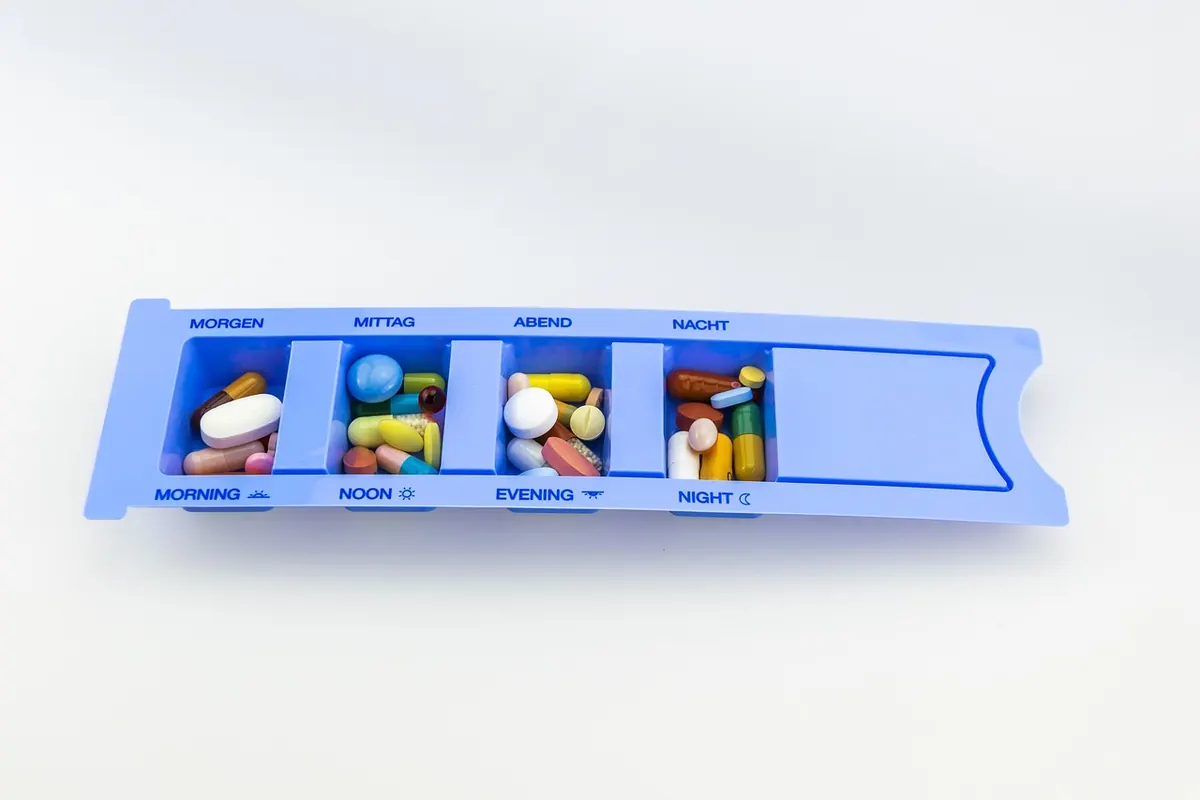
- Fill a weekly pill organiser on the same day each week, at a clear table with good light and no interruptions. If you are unsure whether a tablet can leave its original packaging, ask.
- Anchor doses to fixed moments — brushing teeth, breakfast, the evening news — rather than to memory.
- Ask for a medicines review once a year, and bring everything in a bag, including anything bought without a prescription.
- Write questions down as they occur to you and take the note to the pharmacy; it is easier than reconstructing them at the counter.
- Do not share or hoard. Leftover antibiotics and someone else's painkillers are not spare supplies.
A Short Checklist for the Week Ahead
Pick one thing rather than all six. Turn over the boxes in your cupboard and check for repeated active ingredients. Count what is left in each bottle and note which needs reordering. Move anything living in the bathroom to a drier spot. Then, when you next collect a prescription, ask the pharmacist two questions: what should I do if I miss a dose, and is the timing of this one important?
Those conversations take a couple of minutes and are worth having. Your pharmacist and prescriber know your medicines, your conditions and your other prescriptions; the general guidance here is a starting point, not a substitute for their advice about your situation.
Photo: EmilianDanaila / Pixabay